
In the modern digital ecosystem, the dashboard is no longer just a landing page; it is the “mission control” of the user experience. Whether you are managing enterprise resources, tracking personal health metrics, or overseeing a fleet of autonomous vehicles, the Core App Dashboard serves as the critical interface between complex raw data and actionable human insight.
As we move further into 2026, the expectations for these hubs have shifted. Users no longer want a static wall of charts. They demand an intuitive, predictive, and highly personalized environment that anticipates their needs before they even click a button. If you want another Apps than visit our site net mirrorr.
The Philosophy of “Information at a Glance”
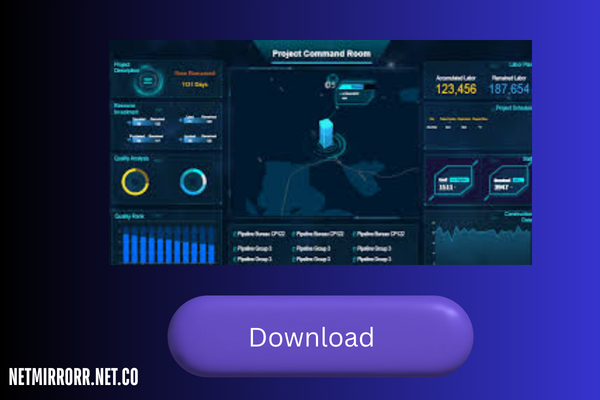
The primary goal of any core dashboard is to reduce cognitive load. In UI/UX design, we often refer to the “Three-Second Rule”: a user should be able to look at their dashboard and understand their primary status be it “All Systems Green” or “Immediate Action Required” within three seconds.
The Hierarchy of Needs:
To achieve this, the Core App Dashboard utilizes a strict visual hierarchy:
- Primary KPIs: High-level metrics (e.g., Total Revenue, Active Users, or System Health) occupy the top-most real estate.
- Trend Indicators: Static numbers are rarely enough. Every KPI should be accompanied by a directional indicator (up/down) and a percentage change over a set period.
- Drill-Down Capability: While the surface remains simple, the architecture allows users to “dive deep” into any metric without losing their place in the app.
Advanced Data Visualization:
Data is only as valuable as the story it tells. The Core App Dashboard moves beyond basic bar graphs to provide sophisticated visualization tools that handle high-dimensional data.
Dynamic Charting:
Using modern libraries, our dashboard supports interactive elements. Users can toggle between views—switching from a linear growth model to a logarithmic scale to better understand exponential trends. For scientific or financial applications, we utilize LaTeX-rendered formulas to ensure precision in reporting. For example, calculating the weighted average cost of capital might involve:
$$WACC = \frac{E}{V} \times Re + \frac{D}{V} \times Rd \times (1 – Tc)$$
By integrating these calculations directly into the dashboard’s logic, users aren’t just seeing data; they are seeing the results of complex business logic in real-time.
Personalization and Modular Design:
One of the biggest mistakes in dashboard design is the “one size fits all” approach. An executive needs a different view than a frontline developer.
The Modular Widget System:
The Core App Dashboard is built on a modular grid. This allows for:
- Role-Based Access Control (RBAC): The system automatically hides or reveals widgets based on the user’s permissions.
- Drag-and-Drop Customization: Users can pin their most-used reports to the top, ensuring their unique workflow is optimized.
- Contextual Awareness: The dashboard can change its layout based on the time of day, current project deadlines, or system alerts.
Technical Architecture: Speed and Security:
Behind the sleek interface lies a robust technical stack designed for low latency and high security.
| Feature | Technology/Standard | Benefit |
| Real-time Updates | WebSockets / gRPC | Zero-refresh data streaming. |
| Data Fetching | GraphQL | Minimizes over-fetching for faster mobile loads. |
| Security | OAuth 2.0 / Biometrics | Enterprise-grade access protection. |
| State Management | Redux / Context API | Ensures UI consistency across different tabs. |
The Power of Edge Computing:
To maintain a “snappy” feel, the Core App Dashboard leverages edge computing. By processing data closer to the user, we reduce the time-to-first-byte (TTFB), ensuring that even global teams experience instantaneous updates.
Integrating AI and Predictive Analytics:
The “Core” of our app is now powered by machine learning. We have transitioned from Descriptive Analytics (what happened?) to Prescriptive Analytics (what should I do?).
Imagine a dashboard that doesn’t just show a drop in user engagement but suggests a specific marketing campaign to fix it. By analyzing historical patterns, the dashboard can forecast future performance with a high degree of accuracy. If we represent a simple linear regression for trend prediction, the system calculates:
$$y = \beta_0 + \beta_1x + \epsilon$$
Where $y$ is the predicted outcome, and $\beta_1$ represents the impact of our primary variable. This allows users to “time travel” through their data, seeing potential future scenarios based on current trajectories.
Accessibility and Cross-Platform Harmony:
A dashboard is useless if it can’t be accessed on the go. The Core App Dashboard follows a “Mobile-First” philosophy, ensuring that the transition from a 32-inch ultra-wide monitor to a 6-inch smartphone screen is seamless.
- Responsive Reflow: Charts transform into simplified lists on mobile to maintain legibility.
- Screen Readers: High contrast modes and ARIA labels ensure the dashboard is accessible to users with visual impairments.
- Offline Mode: Critical data is cached locally, allowing users to review their last known status even in areas with poor connectivity.
The Future: Ambient Intelligence:
Looking ahead, the Core App Dashboard will move away from being a destination and toward being a companion. Through “Ambient Intelligence,” the dashboard will push critical notifications to your smartwatch or smart glasses, only requiring you to open the full interface when deep work is required.
The goal is to move from Interruption to Information. We want the dashboard to be a silent partner in your success, whispering insights when they matter and staying out of the way when they don’t.
Conclusion:
The Core App Dashboard represents the pinnacle of modern software design a perfect marriage of form and function. By focusing on the user’s cognitive needs, leveraging cutting-edge visualization, and maintaining a rock-solid technical foundation, it transforms “big data” into “smart data.”
In an age of information overload, the most valuable tool is the one that tells you exactly what you need to know, exactly when you need to know it. That is the promise of the Core App.